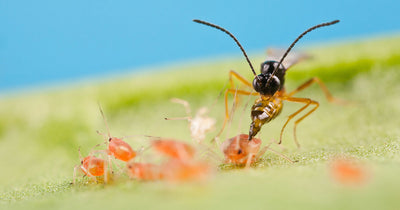




APHILIN 500 - Parasitic wasp Aphelinus Abdominalis
Each 100 ml bottle contains mummies mixed with wood-chips, from which 500 parasitic wasps hatch
*ORDERS FOR BIOLOGICAL PEST CONTROLS MUST BE PLACED BEFORE WEDNESDAYS AT 11:30 AM PST TO BE SHIPPED THE FOLLOWING WEEK*
Use Aphilin for the biological pest control of the potato aphid, glasshouse potato aphid, & Green peach aphid.
Female adult parasitic wasps parasitize the aphid. Host feeding also takes place. Parasitized aphids convert into a leathery, black coloured mummy. The adult parasitic wasp emerges through a hole with a jagged edge at the rear of the mummy. The first mummies are noticed in the crop around 2 weeks after the first introduction.
Application Instructions
- Release mummies near infested plants, because Aphelinus abdominalis is not very mobile
- Spread material on rock wool slabs or in application boxes (Dibox)
- Make sure the material remains dry and at its introduction site for a few days
- Use the peel-off label as a marker of the location where the product was introduced
What to Expect Upon Arrival
This product arrives as mummies in carrier material, not as loose flying adult wasps. Adult Aphelinus abdominalis emerge after placement. Because this wasp is less mobile than some other aphid parasitoids, release near affected plants and keep the material dry at the introduction site.
Important Notes
We import most biological controls fresh to help ensure customers receive active, viable beneficial insects, mites, and nematodes. Because these are living products with limited shelf life, we do not keep most biologicals stocked in-house.
Please inspect your package and product immediately upon arrival, before release. If you have any concerns about condition or viability, contact us before releasing at admin@optimizeorganics.ca with your order number and clear photos of the package and product. Once beneficials have been released, it becomes much more difficult for us to assess their condition on arrival.
Biological pest control is rarely a one-and-done release. In most active pest situations, sequential releases are needed to build and maintain beneficial populations while pest eggs continue to hatch and existing pest pressure is reduced.
Avoid spraying pesticides, oils, soaps, or other residues immediately before or after release unless compatibility has been confirmed, as these may harm beneficials.