



ERVIPAR — Aphidius ervi !!
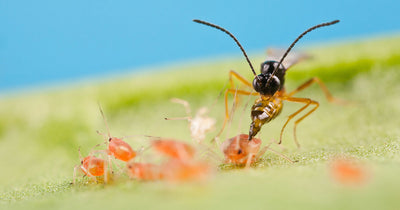
Aphidius ervi is a parasitic wasp used for the biological control of large-bodied aphids, including the potato, glasshouse/foxglove and tobacco aphid. Adult females lay their eggs inside living aphids; the developing wasp consumes the host from within and turns it into a leathery brown mummy, from which the next generation emerges to continue the cycle. It can be introduced preventively or at the first sign of an outbreak in greenhouse vegetables, ornamentals and indoor or interior plantings, and integrates readily into IPM programmes alongside other aphid natural enemies.
Supplied as parasitized aphid mummies in a buckwheat-hull carrier, in three pack sizes:
- Ervipar 250 — 250 mummies in a 100 ml bottle.
- Ervipar 500 — 500 mummies in a 100 ml bottle.
- Ervipar Bulk 5000 — 5,000 mummies in a 0.9 litre cardboard cylinder.
Target Pests
Controls large-bodied aphids, It is best matched to large aphids in the Macrosiphum group rather than small-bodied species.and is especially effective against three species:
- Potato aphid (Macrosiphum euphorbiae) — a primary target
- Glasshouse potato aphid, also called foxglove aphid (Aulacorthum solani) — a primary target
- Tobacco aphid (Myzus persicae var. nicotianae) — also parasitized
Application
Method
Spread the mummies evenly through the crop on rock wool slabs or in application boxes (Diboxes). Keep the material dry and do not move it from its point of introduction for at least a few days, so that the adults can emerge and disperse on their own.
Timing
Introduce soon after planting for preventive control, or at the first sign of aphids. The product begins working immediately on release, though parasitism is not visible at first — the first mummies typically appear in the crop about 10–14 days after the initial introduction.
Frequency
Repeat releases weekly throughout the period when aphids are expected. Ongoing weekly or bi-weekly introductions help maintain an active wasp population in the crop.
Dosage
Apply 0.25–2 mummies per m² per release. The right rate within this range depends on climate, crop and aphid density and should be adjusted to the situation: lighter introductions are appropriate where pressure is low and the aim is preventive, while heavier introductions suit higher aphid densities. Begin soon after planting and repeat weekly throughout the period when aphids are expected.
Environmental Conditions
Most effective between 20 and 25 °C (68–77 °F). Effectiveness declines as temperatures rise, and the wasp is ineffective above 30 °C (86 °F). No specific humidity or light thresholds are published for in-crop performance.
Product Handling & Storage
Introduce the product as soon as possible after receipt — ideally the same day. If it must be held, store it for no more than 1–2 days, in the dark, at 8–10 °C (47–50 °F). The product travels in insulated packaging with cooling packs to protect the mummies in transit; little or no visible movement on arrival is normal, as the mummies may not yet have hatched.
What to Expect Upon Arrival
This product arrives as aphid mummies in carrier material, not as visible flying adult wasps. Adult Aphidius ervi emerge from the mummies after placement. Keep the material dry at the release site and allow time for new mummies to appear in the crop.
Important Notes
We import most biological controls fresh to help ensure customers receive active, viable beneficial insects, mites, and nematodes. Because these are living products with limited shelf lives, we do not keep most biologicals in stock in-house.
Please inspect your package and product immediately upon arrival, before release. If you have any concerns about condition or viability, contact us before releasing at admin@optimizeorganics.ca with your order number and clear photos of the package and product. Once beneficials have been released, it becomes much more difficult for us to assess their condition on arrival.
Biological pest control is rarely a one-and-done release. In most active pest situations, sequential releases are needed to build and maintain beneficial populations while pest eggs continue to hatch and existing pest pressure is reduced.
Avoid spraying pesticides, oils, soaps, or other residues immediately before or after release unless compatibility has been confirmed, as these may harm beneficials.
*ORDERS FOR BIOLOGICAL PEST CONTROLS MUST BE PLACED BEFORE WEDNESDAYS AT 11:30 AM PST TO BE SHIPPED THE FOLLOWING WEEK*