



Soy Amino Acid Biostimulant 16-0-0 is a dry, fully water-soluble soy protein hydrolysate that feeds nitrogen as free L-amino acids and short peptides: the form plants take up and put to work directly, without first having to break raw nitrogen down and rebuild it.
Plant-based, it fits organic, conventional, and hydroponic programs alike, pairs cleanly with biological inputs, and feeds soil biology as well as the crop.
How it's made: enzymatic hydrolysis
It's made by enzymatic hydrolysis rather than the cheaper acid hydrolysis. Acid hydrolysis destroys a share of the amino acids in the process; enzymatic hydrolysis preserves them as intact L-amino acids, the biologically active form roots and leaves absorb directly. Because the amino acids arrive pre-formed, the plant is spared the metabolic cost of building them from scratch and can redirect that energy toward growth, flowering, and fruiting.
Key benefits
Because the nitrogen is already in amino-acid form, the response is quick and the benefits compound with regular use:
-
Fully water soluble: dissolves completely and runs clean through drip, fertigation, and foliar equipment with no residue or clogging.
-
Faster stress recovery: supports plants through transplant shock, drought, heat, cold, and salinity stress, when demand for amino acids can outrun what the plant makes on its own.
-
Stronger roots: encourages fine root mass and root branching for better water and nutrient uptake.
-
Greener growth: supports chlorophyll production and photosynthetic efficiency.
-
Better nutrient use efficiency: tank-mixed with micronutrients, the free amino acids act as natural chelators that help carry iron, zinc, manganese, and other trace elements into the plant and move them where they're needed.
-
Feeds soil biology: the amino acids and peptides are a ready food source for beneficial soil microbes, supporting a more active, diverse root zone.
-
Efficient nitrogen: amino-acid and peptide nitrogen is held and cycled in the root zone, rather than being as prone to the leaching and gaseous losses that affect some soluble mineral nitrogen sources.
Who it's for
The 16-0-0 analysis makes this a nitrogen-forward feed and stress aid rather than a complete fertilizer, so it works best alongside a base program. It suits growers at every scale:
-
Home, raised bed, and container growers: simple low-rate root or foliar feeding to push steady, healthy growth.
-
Houseplants and indoor growers: a gentle, low-dose feed for steady growth and easy recovery after repotting.
-
Greenhouse and market garden: keeps successive plantings feeding steadily through fast, back-to-back crop cycles.
-
Orchards, bush fruit, and vineyards: supports budbreak, fruit set, and sizing.
-
Broadacre and field crops: fertigation or tank-mix at establishment, early growth, and flowering.
-
Turf: a gentle amino-acid feed to support colour and recovery.
How to use
Feed little and often. Frequent low-rate applications outperform occasional heavy ones, and the benefits build as soil biology and nutrient efficiency improve. Works in soil, container, and hydroponic systems.
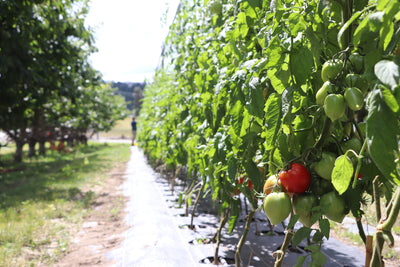
Soil drench and fertigation: Small scale: 0.5-1 g/L to the root zone during normal watering; for vegetables and fruiting crops, start 14-21 days after transplant and repeat every 7-14 days through fruit set and sizing. Field scale: 2-3 kg/ha (1.8-2.7 lb/acre) through drip, trickle, or sprinkler.
Foliar feeding: Small scale: 0.5-1 g/L, early morning or evening, full coverage on both leaf surfaces, every 10-14 days. Scale back or stop once flowers are fully open to keep residue off buds and fruit. Field scale: 2-3 kg/ha (1.8-2.7 lb/acre) in about 100 L of water, or enough for good coverage.
Hydroponics and cannabis: In reservoir and recirculating systems, feed at 0.5-1 g/L and use the nitrogen figures below to track ppm N in the mix. Cannabis and other high-input crops take well to steady feeding through vegetative growth and into early flower.
Nitrogen delivered per dose: Use this to dial in the exact rate for your target ppm N.
0.25 g/L = 40 ppm N
0.50 g/L = 80 ppm N
0.75 g/L = 120 ppm N
1.00 g/L = 160 ppm N
Timing by crop: Vegetables: first feed 10-14 days after transplant, then 3-4 applications at 10-14 day intervals from early flowering through fruit sizing. Broadacre: at seedling establishment, early vegetative growth, and again at flowering or fruit set. Orchards, bush fruit, and vineyards: at budbreak, young fruit stage, and again during sizing.
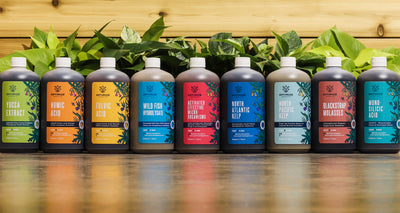
Tank-mix compatibility: Mixes cleanly with most water-soluble inputs, including humic and fulvic acids, kelp extracts, monosilicic acid, molasses, fish hydrolysate, and microbial inoculants. Minimal pH impact at normal rates. Jar-test any unfamiliar combination first.
Guaranteed analysis
Dry, water-soluble powder. Plant-based.
-
Total nitrogen (N): 16%
-
Amino acids: 80% (vegetable protein hydrolysate)
Storage and safety
Store cool and dry, sealed between uses. The powder can absorb moisture and clump if left open; it's still usable if it clumps, and dissolves more easily when kept dry. Wear a dust mask and gloves when handling the dry powder, and wash skin with soap and water after contact. Keep out of reach of children and animals.
Approved for use in organic production
Permitted for use in organic production under Canada's organic standards, CAN/CGSB-32.310-2026 and CAN/CGSB-32.311-2026.