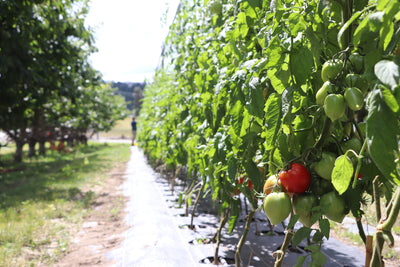




Rhizobiome Growth Phase is a concentrated blend of two of the most studied plant-growth-promoting rhizobacteria (PGPR) in agriculture: Bacillus subtilis and Bacillus licheniformis. Built for the establishment and vegetative stage of virtually any crop - vegetables, herbs, fruit, ornamentals, turf, orchard, vineyard, field crops and cannabis. It seeds the root zone with beneficial bacteria that colonize roots quickly, unlock bound nutrients, and establish a functional rhizosphere microbiome from day one.
What Rhizobiome Growth Phase Does
This is a root-zone inoculant designed to be applied early, when a plant is building the root system that will carry it through the rest of its life. The two Bacillus species act through complementary mechanisms: hormone signalling, nutrient solubilization, and pathogen suppression, to drive greater early root mass, faster top growth, and greater resilience to stress.
A Note for Living-Soil & No-Till Growers
In a mature, biologically complete living-soil system, Rhizobiome is not a replacement for a well-brewed, actively aerated compost tea (AACT). A good tea delivers a level of trophic complexity and microbial diversity that no bottled inoculant can match. Think of Rhizobiome as a precision tool, a way to reinforce specific, high-value microbial functions in the root zone when you want consistent, targeted support alongside your teas, compost, and other biological inputs.
How It Works
Bacillus subtilis - The Root Colonizer
B. subtilis is a fast, aggressive root colonizer that forms protective biofilms along the rhizoplane. It produces auxins (and other phytohormones) that drive cell division, lateral root branching, and root hair development, thereby increasing root surface area for water and nutrient capture. It solubilizes bound phosphorus and improves access to micronutrients through siderophore production, and it manufactures a suite of antifungal lipopeptides (surfactin, iturin, and fengycin) that suppress soil-borne pathogens such as Fusarium, Pythium, and Rhizoctonia. These same compounds can prime the plant's own defences through induced systemic resistance (ISR).
Bacillus licheniformis - Elongation and Nutrient Access
B. licheniformis is a proven producer of bioactive gibberellins, the hormones behind stem elongation, taller structured plants, and improved chlorophyll content for stronger photosynthesis. It adds more auxin to the mix, solubilizes both phosphate and potassium, produces ammonia and enzymes that accelerate organic-matter breakdown, and improves overall nitrogen-use efficiency, helping the plant get more from the nutrients already in the soil.
Better together
Run side by side, the two species stack root architecture, hormone signalling, and nutrient availability at the exact moment a young plant needs them most. The result is more root mass, faster vegetative growth, sturdier stems, and greater stress tolerance, a foundation that pays off in yield later in the cycle, while reducing reliance on synthetic inputs and building long-term soil biology.
Key Benefits
-
Explosive early root development - more lateral roots, longer root hairs, greater surface area for uptake
-
Faster vegetative growth - auxin- and gibberellin-driven cell division and stem elongation
-
Better nutrient access - phosphorus and potassium solubilization, improved nitrogen-use efficiency, siderophore-driven micronutrient availability
-
Built-in pathogen pressure - lipopeptide antifungals suppress Fusarium, Pythium, and Rhizoctonia and prime plant defences (ISR)
-
Stronger, more resilient plants - sturdier stems, better chlorophyll content, improved stress tolerance
-
Fewer synthetic inputs - supports a self-sustaining rhizosphere and long-term soil health
What Crops It's For
Suitable across the board: leafy greens and vegetables, herbs, berries and fruiting crops, ornamentals and flowers, turf and lawns, orchard and vineyard, broadacre field crops, and cannabis. Best applied from seedling/transplant through the vegetative and establishment phases.
How to Use
Soil & root drench
Apply at a rate of 0.5-1 mL per litre of water (2-4 mL per gallon) and drench the growing medium so the solution reaches the root zone. Enriches the rhizosphere, improves root function, and supports overall soil vitality.
Timing & frequency
Apply weekly during the vegetative and establishment phase, from seedling or transplant through mid-veg for best results.
Get the most from it
Pair with the full Rhizobiome series to support microbial succession through the entire grow cycle, and use alongside compost teas, quality compost, and other biological inputs rather than in place of them.
Guaranteed Analysis
-
Bacillus subtilis - 1.2 × 10¹¹ CFU/g (120 billion CFU/g)
-
Bacillus licheniformis - 3.0 × 10¹⁰ CFU/g (30 billion CFU/g)
Storage & Safety
-
Store in a cool, dry place away from direct sunlight.
-
Keep out of reach of children and pets.
-
Avoid ingestion and contact with eyes. If contact occurs, rinse thoroughly with water.
Organic Compliance
This product complies with Canada's Organic Production Systems General Principles and Permitted Substances Lists (CAN/CGSB-32.310-2026, CAN/CGSB-32.311-2026).