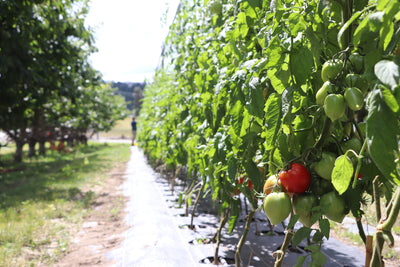




Rhizobiome Bloom Phase delivers pure Bacillus amyloliquefaciens, a flowering-stage specialist selected to support denser flowers, better fruit fill, and healthier finishing across a wide range of crops. During bloom and fruiting, plants pull hard on phosphorus and potassium to drive energy transfer, flower and fruit development, and ripening. This single-strain inoculant helps by solubilizing locked-up P and K through organic acid secretion, improving nutrient availability right when living soils are working hardest. Whether you're a market gardener, an orchard or vineyard grower, a berry or flower farmer, a home gardener, or a cannabis cultivator, it puts a proven nutrient-cycling workhorse in the root zone to carry your crop from flower to harvest.
What Rhizobiome Bloom Phase Does
Flowering and fruiting are the most nutrient-hungry stages of the season. Rhizobiome Bloom Phase improves the availability of the phosphorus, potassium, and micronutrients that flower and fruit development depend on, right when demand is highest. It completes the Rhizobiome succession system, taking over from Transition Phase to hold the rhizosphere through fruiting and ripening.
A Note for Living-Soil & No-Till Growers
In a mature, biologically complete living-soil system, Rhizobiome is not a replacement for a well-brewed actively aerated compost tea (AACT). A good tea delivers a level of trophic complexity and microbial diversity that no bottled inoculant can match. Use Rhizobiome as a precision tool, a way to reinforce specific, high-value microbial functions in the root zone during bloom, alongside your teas, compost, and other biological inputs rather than in place of them.
How It Works
Phosphorus & potassium availability
B. amyloliquefaciens secretes organic acids that free up bound phosphorus and potassium in the soil, converting them into plant-available forms. Those are the two nutrients plants draw on most heavily during flowering, fruit fill, and ripening, so keeping them flowing supports energy transfer and finishing weight.
Micronutrient uptake through siderophores
B. amyloliquefaciens also produces siderophores, compounds that chelate iron and improve access to the micronutrients that underpin healthy enzyme function and metabolism. In a well-fed plant, that healthy metabolism is part of what supports strong flavour and aroma development in the finished crop.
Natural antimicrobial compound production
As part of its normal metabolic activity, B. amyloliquefaciens produces lipopeptide compounds (surfactins, iturins, and fengycins). This is one of the most studied traits of this species in agricultural research, and it's a natural function of the strain in the root zone, alongside its nutrient-cycling and root-support activity, rather than a stand-alone treatment.
Sustained root health into late cycle
Continued auxin production helps keep roots active and expanding deep into the cycle, supporting nutrient uptake and helping plants avoid the late-stage stress that can cost you in the final weeks.
Key Benefits
-
Phosphorus and potassium mobilization: organic acids unlock the bound P and K that flowering and fruiting demand
-
Better micronutrient uptake: siderophore production supports enzyme function and healthy metabolism
-
Natural lipopeptide production: part of the strain's normal metabolic activity, well documented in agricultural research
-
Sustained root health: auxin production keeps roots active and reduces late-cycle stress
-
Completes the succession: high-count single strain built to dominate the rhizosphere through fruiting and ripening
-
Fewer inputs: supports a self-sustaining root zone in no-till, organic, and regenerative programs
What Crops It's For
Built for the flowering-through-ripening stretch of any fruiting or blooming crop. In the market garden and greenhouse: tomatoes, peppers, cucumbers, and squash through fruit fill. For orchard, vineyard, and berry growers: through fruit development and ripening. For flower farmers and ornamental growers: denser, healthier blooms. And for home gardeners, it's a simple weekly drench to carry anything that flowers or fruits through to harvest.
For Cannabis Growers
Flowering is when the plant packs on weight through bulking, and demand for phosphorus and potassium hits its peak. During bloom, plants demand high phosphorus and potassium to fuel energy transfer, flower development, and resin production. B. amyloliquefaciens helps by solubilizing locked-up P and K through organic acid secretion, improving nutrient availability right when living soils are working hardest. The payoff is a root zone that keeps feeding the canopy through the heaviest weeks of bulking, supporting denser blooms, stronger aromatic expression, and peak cannabinoid potential in cannabis and specialty crops.
Those aromas and cannabinoids are made in the trichomes, and studies on Bacillus inoculants in cannabis have associated them with higher trichome density on the flower, more flowering sites, and heavier inflorescences. By keeping phosphorus, potassium, iron, and micronutrients moving during the bulking window (through organic acids and siderophores), Rhizobiome Bloom Phase supports the healthy plant metabolism that flavour and potency are built on. That makes it a natural fit for living-soil, no-till, and organic programs.
The late canopy is also the toughest stretch on the root zone: dense, humid, and slow to dry. Through this window Bloom Phase contributes its natural lipopeptide-producing activity to the roots, part of how Bacillus establishes and holds its place in a crowded rhizosphere and keeps the root system resilient. Sustained root health this late in the cycle helps plants stay productive and low-stress right through ripening.
As the final step in the Rhizobiome succession system, Bloom Phase takes over from Transition Phase and holds the root zone through the most valuable weeks of the grow. For season-long microbial support, run the full series from Growth Phase forward.
How to Use
Soil & root drench
Apply at a rate of 0.5 to 1 mL per litre of water (2 to 4 mL per gallon) and drench the growing medium so the solution reaches the root zone. This enriches the rhizosphere, improves root function, and supports overall soil vitality.
Timing & frequency
Apply weekly through the flowering and fruiting period, from early flower through bulking and ripening.
Get the most from it
Rhizobiome Bloom Phase completes the succession system: use it after Rhizobiome Transition, or run the full Rhizobiome series (Growth Phase, Transition, Bloom Phase) for season-long microbial support and reduced inputs. Pair with compost teas, quality compost, and other biological inputs.
Guaranteed Analysis
Bacillus amyloliquefaciens: 1.3 × 10¹¹ CFU/g (130 billion CFU/g)
Storage & Safety
Store in a cool, dry place away from direct sunlight.
Keep out of reach of children and pets.
Avoid ingestion and contact with eyes. If contact occurs, rinse thoroughly with water.
Organic Compliance
This product complies with Canada's Organic Production Systems General Principles and Permitted Substances Lists (CAN/CGSB-32.310-2026, CAN/CGSB-32.311-2026).