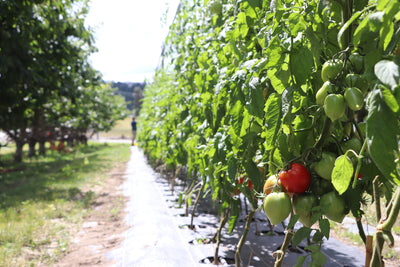




Rhizobiome Transition bridges vegetative momentum into strong, structured flowering with a precise duo of plant-growth-promoting rhizobacteria (PGPR): Bacillus licheniformis and Bacillus amyloliquefaciens. It's built for the critical shift from vegetative growth into bloom and fruit set, whether you're a market gardener growing tomatoes and peppers, an orchardist or berry grower, a flower farmer, a home gardener, or a cannabis cultivator. As the plant's demands change, it supports rapid root-zone adaptation and efficient nutrient cycling, helping maintain vigour, structure, and metabolic pace through this high-demand window.
What Rhizobiome Transition Does
The move from vegetative growth into flowering is one of the most metabolically demanding moments in a plant's life. The root zone has to keep pace while the plant reprioritizes toward reproductive growth. This inoculant reinforces that hand-off by pairing enzymatic nutrient release and structural hormone signalling with phosphorus mobilization and pathogen defense, so plants carry their momentum into bloom instead of stalling or stretching weakly.
A Note for Living-Soil & No-Till Growers
In a mature, biologically complete living-soil system, Rhizobiome is not a replacement for a well-brewed actively aerated compost tea (AACT). A good tea delivers a level of trophic complexity and microbial diversity that no bottled inoculant can match. Use Rhizobiome as a precision tool, a way to reinforce specific, high-value microbial functions in the root zone at the transition, alongside your teas, compost, and other biological inputs rather than in place of them.
How It Works
Bacillus licheniformis, enzymes, nutrient release & controlled structure
B. licheniformis leads the hand-off. It's a prolific producer of extracellular enzymes, proteases and amylases among them, that break down organic matter and release tied-up nutrients right as demand climbs. It also produces bioactive gibberellins, the hormones behind controlled internode elongation and sturdier branch and truss structure. This helps plants build a frame that can carry a heavy flower or fruit load instead of going weak and leggy.
Bacillus amyloliquefaciens, phosphorus, roots & defense
B. amyloliquefaciens is one of the most studied biocontrol PGPR in agriculture. It helps mobilize phosphorus into plant-available forms for the energy transfer that flower and fruit set depend on, and it produces auxins that keep roots expanding into bloom. Just as importantly, it manufactures a broad arsenal of lipopeptides (surfactin, iturin, fengycin) and other antimicrobials, and primes the plant's own immune system through induced systemic resistance (ISR). That reinforces defenses against the late-veg and early-flower pathogens that hit hardest during the transition.
Seamless succession
Run together, the two species deliver a smooth microbial hand-off: momentum carried forward from the vegetative phase while the rhizosphere is primed for the heavier nutrient demands of flowering. The result is less transition stress, more consistent structure and metabolic pace, and better nutrient efficiency, all supporting natural structural regulation without reaching for synthetic plant growth regulators.
Key Benefits
-
Smoother vegetative-to-bloom transition: reduced stall and stretch stress through the shift into flower
-
Faster nutrient release: protease and amylase activity frees tied-up nutrients as demand climbs
-
Structured, sturdier plants: gibberellin-driven controlled elongation for frames that carry flower and fruit load
-
Energy for flower and fruit set: phosphorus mobilization and auxin-driven root expansion
-
Built-in defense: lipopeptide antimicrobials plus induced systemic resistance (ISR) against transition-phase pathogens
-
No synthetic PGRs: natural hormone signalling instead of chemical growth regulators
What Crops It's For
Suitable for any flowering or fruiting crop moving from vegetative growth into bloom. In the market garden and greenhouse: tomatoes, peppers, cucumbers, squash, and other fruiting vegetables. For orchard, vineyard, and berry growers: through the shift into fruit set. For flower farmers and ornamental growers: sturdier stems and structure heading into bud. And for home gardeners raising anything that flowers or fruits, it's an easy weekly drench through the changeover.
For Cannabis Growers
For cannabis, the transition covers the flip to flower and the stretch that follows, the window where plants can shoot up tall and leggy if their structure doesn't keep pace. Rhizobiome Transition supports controlled, gibberellin-driven elongation and sturdier branching, so plants build a frame that can hold dense, heavy flower rather than stretching thin. Phosphorus mobilization and continued root expansion feed the energy demands of early bud site development, while enzymatic nutrient release keeps the root zone supplying the plant as its needs shift into bloom.
Because that structural regulation comes from natural microbial hormone signalling, it fits living-soil, no-till, and organic programs that steer clear of synthetic plant growth regulators. And by keeping plants low-stress and well-fed through the flip, it helps them stay on pace into bloom, giving your genetics the healthy foundation they need to finish strong. Use it as part of the full Rhizobiome series for microbial succession across the entire grow.
How to Use
Soil & root drench
Apply at a rate of 0.5 to 1 mL per litre of water (2 to 4 mL per gallon) and drench the growing medium so the solution reaches the root zone. This enriches the rhizosphere, improves root function, and supports overall soil vitality.
Timing & frequency
Apply weekly through the transition, from the final week of vegetative growth into the first one to two weeks of flowering.
Get the most from it
Use after Rhizobiome Growth Phase to carry vegetative momentum forward, then follow with Rhizobiome Bloom Phase for peak flowering performance. Pair with compost teas, quality compost, and other biological inputs.
Guaranteed Analysis
-
Bacillus licheniformis: 5.0 × 10¹⁰ CFU/g (50 billion CFU/g)
-
Bacillus amyloliquefaciens: 1.0 × 10⁸ CFU/g (100 million CFU/g)
Storage & Safety
-
Store in a cool, dry place away from direct sunlight.
-
Keep out of reach of children and pets.
-
Avoid ingestion and contact with eyes. If contact occurs, rinse thoroughly with water.
Organic Compliance
This product complies with Canada's Organic Production Systems General Principles and Permitted Substances Lists (CAN/CGSB-32.310-2026, CAN/CGSB-32.311-2026).