


How to Use Mycorrhizal Fungi in Living Soil (Step-by-Step Guide)

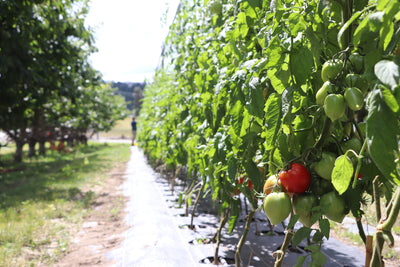
Image: Topping garden beds with a 2-inch layer of composted peat to protect soil life and reduce weed pressure.
Why Mycorrhizal Fungi Matter in Living Soil
Healthy plant growth depends both on what’s in the soil and on how effectively roots can access it. In living soil systems, much of the water and nutrients plants require can exist just beyond the effective reach of the roots. This is where mycorrhizal fungi play a critical role.
Mycorrhizal fungi form direct, symbiotic relationships with plant roots, effectively extending the functional root system into the surrounding soil. Through this partnership, plants gain access to a far greater volume of water and nutrients than roots could reach on their own, while the fungi receive sugars produced by the plant through photosynthesis. This exchange underpins nutrient efficiency, drought resilience, and overall plant performance in living soil systems.
The term mycorrhizae is often used broadly, but it refers to several distinct types of fungal–plant relationships, each adapted to different plant families and growing environments. In living soil and container-based systems, the most relevant group is Arbuscular Mycorrhizal Fungi (AMF), also known as endomycorrhizal fungi. These fungi associate with the vast majority of food crops, herbs, and annual plants.
How to Apply Arbuscular Mycorrhizal Fungi at Transplant
Mycorrhizal fungi require a living root host to establish a functional symbiosis. Applying them away from the roots, or watering them into soil without a host, can trigger partial germination without successful colonization, reducing effectiveness and wasting inoculant. A small amount applied directly to the roots at transplanting is far more effective than heavy, broadcast applications.

Key Benefits of Arbuscular Mycorrhizal Fungi in Living Soil
The following effects are commonly observed following successful root-zone colonization:
- Improved root system development: Root colonization influences root branching and fine root formation, while fungal hyphae extend beyond the root surface into the surrounding soil, increasing overall nutrient uptake capacity.
- Enhanced micronutrient uptake: In addition to phosphorus, colonized plants show increased uptake of zinc, copper, iron, manganese, and other trace minerals that are often limited in soil.
- Improved nutrient-use efficiency: Plants can achieve comparable growth with lower fertilizer inputs, thereby reducing nutrient losses and improving overall system efficiency.
- Improved plant vigour and uniformity: Colonized plants typically exhibit more consistent growth, increased vigour, and improved overall performance across a crop.
- Increased yield and quality: In many crops, root colonization is associated with improved yield, biomass, flowering, and fruit quality.
- Carbon sequestration and soil biology support: Mycorrhizal activity contributes to soil carbon storage through glomalin production and supports healthier, more biologically active soil systems.
- Improved establishment in disturbed or degraded soils: These effects are particularly beneficial in compacted, low-fertility, or biologically depleted soils, including post-construction sites and heavily farmed land.
Why Mycorrhizal Fungi Excel at Phosphorus Uptake
If there is one nutrient that highlights the importance of mycorrhizal fungi, it is phosphorus. Phosphorus is essential for root development, flowering, fruit production, energy transfer, and the production of oils, resins, and aromatic compounds. Yet phosphorus is one of the least mobile nutrients in soil. It does not readily move through water, and plant roots are surprisingly inefficient at locating it independently. This is where mycorrhizal fungi excel. They are exceptionally good at locating phosphorus and transporting it directly into plant roots.
While phosphorus is the most visible example, mycorrhizal fungi also play an important role in the uptake of several micronutrients that are critical to plant function. Elements such as zinc, copper, iron, and manganese are required in small amounts but are often poorly available due to soil chemistry or low mobility. Mycorrhizal hyphae extend beyond the root depletion zone, accessing these nutrients and delivering them directly into the plant.
When phosphorus and key micronutrients are accessible through active soil biology, plants develop differently. Roots grow more fully, internode spacing tightens, flower development improves, and maturation becomes more uniform rather than stalling or finishing unevenly. Because phosphorus is vital for energy transfer within the plant, consistent availability supports processes such as sugar transport, oil and resin production, and the plant’s ability to recover from stress.
Video: Robotic imaging reveals complex secrets of plant-fungal networks.
Flavour, Aroma, and Quality You Can Taste
Flavour and aroma are expressions of plant chemistry, not just growth. The compounds responsible for taste, smell, colour, and overall character, such as essential oils, resins, sugars, and antioxidants, are produced most efficiently when a plant has access to balanced nutrition and a stable root environment. Mycorrhizal fungi expand the effective root system, improving the plant’s ability to access phosphorus, micronutrients, and water that would otherwise remain unavailable. This improved nutrient efficiency reduces stress and enables the plant to allocate more energy to secondary metabolites rather than to basic survival. The result is a stronger aroma, richer flavour, deeper colour, and greater complexity in crops where quality matters most.

Which Plants Benefit From Arbuscular Mycorrhizal Fungi
Plants that benefit: Cannabis, most culinary herbs, tomatoes, peppers, squash/cucumbers/melons, beans/peas, strawberries, carrots, lettuce, potatoes, onions/garlic/leeks, corn and many grains, grapevines, most fruit and nut trees, ornamentals/flowers
Plants that do not benefit: Broccoli, cabbage, kale, cauliflower, mustards (Brassicaceae), beets, spinach, chard, quinoa/amaranth (Amaranthaceae), and Blueberries.
**These lists are not exhaustive and serve as a general guide
A Living Extension of the Root System
Once mycorrhizal fungi colonize a plant’s roots, they form microscopic connections inside the root tissue and extend outward into the surrounding soil through ultra-fine threads called hyphae. These threads function as an extension of the root system but are far more efficient. They access soil pores that roots cannot penetrate, reach nutrients locked in soil particles, transport nutrients over greater distances, and efficiently transport water during dry conditions. The result is a dramatically increased effective root system without the plant needing to expend extra energy on root growth. In exchange for sugars from the plant, the fungi act as dedicated scouts for nutrients and water. It is a natural biological trade that benefits both sides.

Photo: Arbuscular mycorrhizal fungi spores under the microscope.
Protecting the Fungal Network
In stable, long-term living beds, mycorrhizal fungi do not require constant reapplication. They establish through contact with living roots and persist as long as those conditions remain intact. The priority is to maintain soil cover and minimize disturbance whenever possible.
In permanent garden bed systems, use mulch and wood chips in walkways, and landscape fabric where appropriate. Covered soil helps retain moisture, moderate temperature, and protect the fungal life below.
Arbuscular mycorrhizal fungi (AMF) require living roots to remain metabolically active. When a host plant is killed, carbon inputs stop and active hyphae begin to decline. Although the mycorrhizal network is no longer functional in the absence of living roots, AMF can persist in the soil as spores, vesicles, and other residual propagules. In systems where living roots from companion plants or perennials remain, mycorrhizal networks can stay active and rapidly colonize newly established plants.
Indoor and container systems present different realities. Soil is often disturbed or reset every three to four months, disrupting fungal networks before they can fully stabilize. In these environments, reusing living soil remains beneficial, but supplementing with mycorrhizal fungi is advisable. Inoculating transplants early—while plants are young—gives fungi the best opportunity to establish quickly with new roots and begin delivering benefits.

A Practical Tool for Building Stronger Root Systems
If you want to put these principles into practice, our Arbuscular Mycorrhizal Fungi (AMF) inoculant is designed specifically for use in living soil systems. It contains high-quality, viable arbuscular mycorrhizal fungi formulated in a specialized root-zone conditioning carrier enhanced with naturally derived humic compounds. This formulation supports early root signalling, improves micronutrient availability, and creates favourable conditions for rapid mycorrhizal establishment. The integrated carrier system helps protect fungal spores, maintain optimal moisture at the root interface, and promote consistent colonization—supporting reliable performance under real-world growing conditions. When used correctly and applied directly to living roots at transplant, AMF can become a foundational biological tool for improving root efficiency, nutrient uptake, and long-term soil health within a balanced living-soil approach.
👉 Learn more about our Arbuscular Mycorrhizal Fungi inoculant here:
https://www.optimizeorganics.ca/products/arbuscular-mycorrhizal-fungi